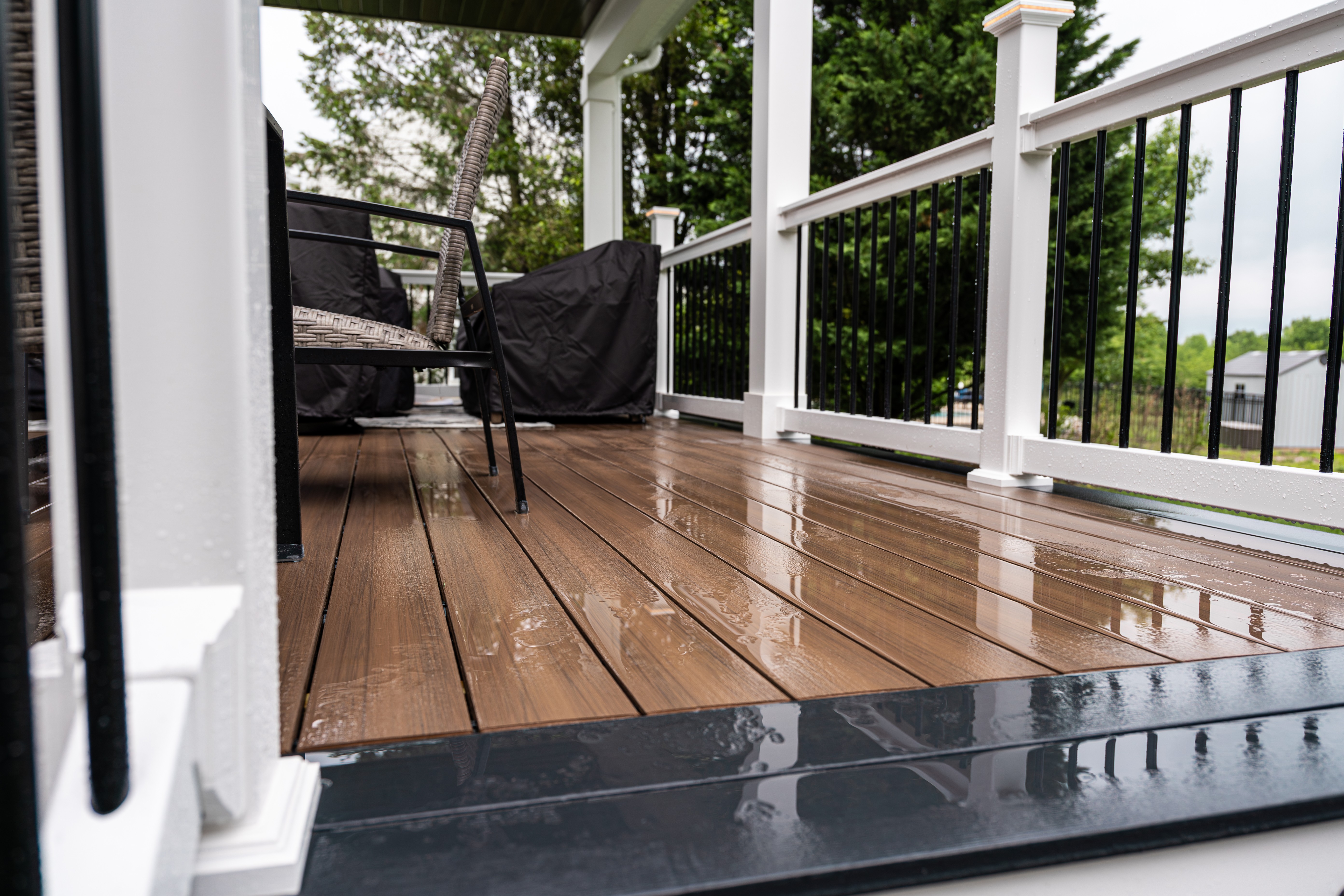
Quick Answer: Composite decking outperforms pressure-treated wood in durability, low maintenance, and long-term value—making it the smarter choice for most South Jersey homeowners. Pressure-treated wood costs less upfront but requires ongoing maintenance and tends to degrade faster in the region's humid coastal climate.
Key Takeaways
Composite decking offers superior durability and requires far less maintenance than pressure-treated wood, making it well-suited for South Jersey's humid, coastal conditions.
Pressure-treated wood has a lower upfront cost but demands regular staining, sealing, and repairs that add up over time.
Working with an experienced deck builder in South Jersey ensures your deck is built to last, regardless of the material you choose.
South Jersey homeowners love their outdoor spaces. From backyard barbecues in Medford to waterfront entertaining in Avalon, a well-built deck adds serious value—both financially and in quality of life. But before the first board goes down, there's a decision to make: composite or pressure-treated wood?
Both materials have genuine merits. The right choice depends on your budget, how much maintenance you're willing to do, and how long you plan to stay in your home. This guide breaks down both options side by side so you can make an informed decision—and get more out of your outdoor investment.
What Is Composite Decking?
Composite decking is an engineered material made from a blend of recycled wood fibers and plastic. Brands like Trex, TimberTech, and Azek have refined the product significantly over the past decade. Modern composite boards resist moisture, fading, and staining—and they don't splinter.
For homeowners considering composite decking in South Jersey, the appeal is clear. South Jersey's climate brings hot, humid summers, coastal salt air, and wet winters—conditions that can be brutal on natural wood. Composite decking is specifically engineered to handle these kinds of environmental stressors without warping or cracking.
What Is Pressure-Treated Wood?
Pressure-treated (PT) lumber is softwood—typically pine—that has been chemically treated to resist rot, insects, and moisture. It's been the default choice for decks for decades and remains widely available at any home improvement store.
PT wood has a natural aesthetic that many homeowners find appealing, and it costs significantly less per board foot than composite alternatives. However, that lower price tag comes with trade-offs.
How Do Composite and Pressure-Treated Decks Compare?
Which material is more durable in South Jersey's climate?
Composite decking holds a clear edge in durability. Most manufacturers back their products with warranties of 25 to 30 years, and the material resists the moisture, UV exposure, and salt air that South Jersey homeowners deal with year-round.
Pressure-treated wood, by contrast, is more susceptible to the elements. Without regular maintenance, PT boards can crack, warp, and develop mold. In coastal environments especially, this deterioration can happen faster than homeowners expect.
How much maintenance does each material require?
This is where the gap between the two materials is most dramatic.
Composite decking requires almost no maintenance. An occasional wash with soap and water keeps it looking new. There's no staining, no sealing, and no sanding required—ever.
Pressure-treated wood needs to be cleaned, stained, and sealed every one to three years to stay in good condition. Skip a season, and you'll likely see cracking, greying, and moisture damage. Over a 10-year period, those maintenance costs can easily exceed the initial price difference between the two materials.
What are the upfront and long-term costs of each deck type?
Pressure-treated wood costs less upfront—typically $15 to $25 per square foot installed, compared to $30 to $45 per square foot for composite. For a 400-square-foot deck, that's a difference of $6,000 to $8,000.
But factor in maintenance costs over a decade—staining supplies, sealers, or professional refinishing—and the gap narrows significantly. Composite decking also tends to increase resale value more than PT wood, which is worth considering if you plan to sell your home.
How does each material look over time?
Pressure-treated wood has an undeniable warmth and authenticity. Freshly stained PT decking looks beautiful. The issue is sustaining that appearance—without consistent upkeep, the wood weathers and grays relatively quickly.
Composite boards have improved enormously in aesthetics. Modern products closely mimic the look of natural wood, with realistic grain patterns and a wide range of colors. And unlike PT wood, composite maintains its appearance without staining or refinishing.
Which decking material is more eco-friendly?
Composite decking made from recycled materials has a strong sustainability story. Trex, for instance, claims to use 95% recycled or reclaimed material in its products.
Pressure-treated wood uses chemicals—historically arsenic-based compounds, now replaced with safer alternatives like copper azole—that can leach into soil over time. Sustainably sourced PT lumber is available, but it requires more research to source responsibly.
Which Deck Material Is Right for Your South Jersey Home?
The answer comes down to your priorities.
Choose composite decking if:
You want a low-maintenance deck that holds up in coastal or humid conditions
You're planning to stay in your home for 10+ years and want long-term value
Aesthetics and consistency of appearance matter to you
Choose pressure-treated wood if:
You have a tighter upfront budget and are comfortable with periodic maintenance
You prefer the look and feel of natural wood and are willing to put in the work to preserve it
You're building a temporary structure or a deck with a shorter expected lifespan
For most South Jersey homeowners, composite deck installation in South Jersey represents the better long-term investment. The combination of durability, low maintenance, and climate resistance makes it a practical fit for the region.
Work With a Trusted Deck Builder in South Jersey
Material selection matters—but so does the quality of installation. Even the best composite boards underperform when improperly installed. Partnering with an experienced deck builder in South Jersey ensures your deck is built to manufacturer specifications, properly fastened, and designed to handle local conditions.
PCT Outdoor Living specializes in composite deck installation throughout South Jersey, helping homeowners choose the right materials and build decks that last. Whether you're leaning toward composite or still weighing your options, our team is here to guide you through every step.
Frequently Asked Questions
Is composite decking worth the extra cost in South Jersey?
For most homeowners, yes. The lower maintenance requirements and longer lifespan of composite decking offset the higher upfront cost—particularly in South Jersey's humid, coastal climate where PT wood tends to deteriorate faster.
How long does a composite deck last compared to a pressure-treated deck?
Composite decks typically last 25 to 30 years with minimal upkeep. Pressure-treated wood decks generally last 10 to 15 years with consistent maintenance, and less without it.
Does composite decking get hot in the South Jersey summer sun?
Composite boards can retain more heat than wood in direct sunlight. However, most premium brands now offer heat-resistant formulations, and choosing lighter colors can help reduce surface temperature.
Can I install composite decking myself, or do I need a professional?
While DIY installation is possible, composite decking has specific fastening and spacing requirements. Improper installation can void the manufacturer's warranty. Working with a licensed deck builder in South Jersey is the safer, smarter choice.
What composite decking brands do South Jersey contractors typically recommend?
Trex, TimberTech, and Azek are the three most widely recommended composite brands. Each offers a range of price points, aesthetics, and warranty terms worth comparing before committing.