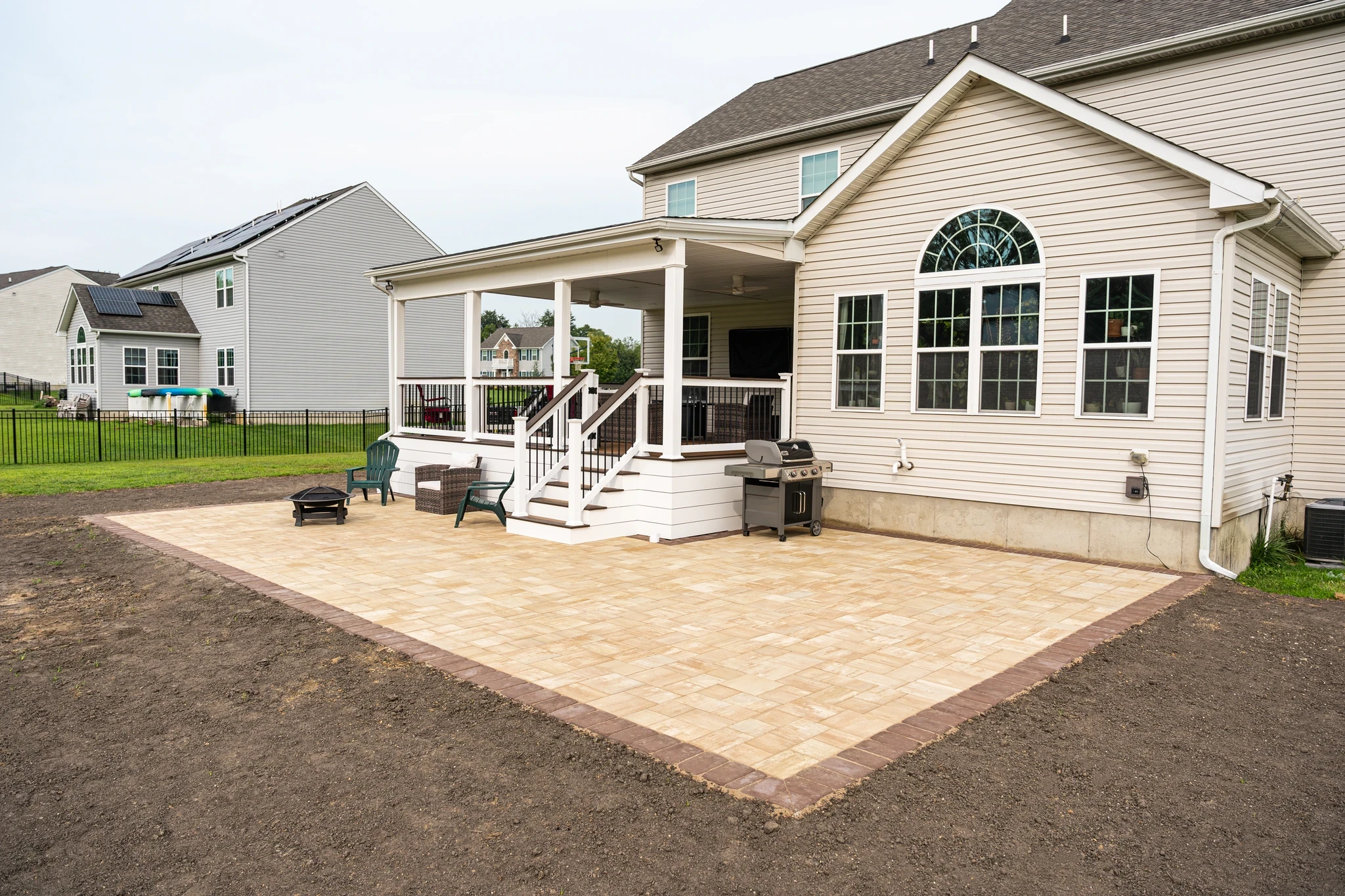
A deck is a raised wooden or composite platform ideal for uneven terrain and maximizing views, while a patio is a ground-level paved area offering exceptional durability and lower maintenance. Your final choice depends heavily on your yard's topography, your budget, and how much time you want to spend on upkeep.
Key Takeaways
Decks provide an excellent solution for sloped properties and homes with raised first floors.
Patios generally offer superior longevity, support heavier structures like fire pits, and require minimal maintenance.
Partnering with an expert Hardscape Company South Jersey ensures proper grading, material selection, and adherence to local building codes for a flawless installation.
Expanding your outdoor footprint adds immediate functional space to your property. Homeowners frequently encounter a primary decision when planning a backyard renovation: choosing between a patio and a deck. Both structures provide excellent venues for entertaining guests, dining outdoors, and relaxing with family during the warmer months.
The physical topography of your yard dictates a large portion of this decision. A perfectly flat lawn easily accommodates laid pavers or natural stone. Conversely, a steep incline or uneven terrain often necessitates an elevated wooden or composite structure. Budget constraints, long-term maintenance requirements, and local zoning laws also influence the final project direction.
Understanding the specific benefits and limitations of each feature helps guarantee that your financial investment aligns with your daily lifestyle. PCT Outdoor Living specializes in navigating these exact choices. We help property owners design and install custom backyard environments tailored perfectly to their unique spatial requirements.
What are the defining characteristics of decks and patios?
A deck is an open outdoor porch or platform without a roof that extends from a house. Builders typically construct decks using treated lumber, cedar, or modern composite materials. Because decks are elevated, they require support joists and posts. This elevation often mandates the installation of railings and stairs to meet safety regulations.
A patio is a paved outdoor area situated directly on the ground. Contractors construct patios using materials like concrete, brick, natural stone, or interlocking pavers. Patios do not require safety railings because they sit flush with the earth. They integrate seamlessly into the surrounding landscaping, often blurring the lines between the living space and the garden.
Why should you consider building a deck?
Decks excel in specific environmental conditions where patios struggle. If your property features a steep drop-off, rolling hills, or significantly uneven terrain, building a raised deck solves the grading problem without requiring massive retaining walls or earth-moving equipment.
Homes built with living spaces sitting high off the ground also benefit from decks. An elevated deck allows you to step directly out of your kitchen or living room without navigating a long flight of exterior stairs. Additionally, elevated decks capture better breezes and offer superior views of your neighborhood or surrounding nature.
Wood and composite materials also absorb less heat than stone or concrete. During the peak of summer, a wooden deck remains noticeably cooler under bare feet compared to a sun-baked concrete patio.
What makes a patio a durable and smart investment?
Patios provide a grounded, permanent feel to an outdoor living area. Because they rest entirely on the earth, patios can support immense amounts of weight. If you plan to install a heavy outdoor kitchen, a massive stone fireplace, or a large hot tub, a patio provides the necessary structural foundation without the need for complex structural engineering.
Durability stands out as a primary advantage of patio installation. Quality pavers and natural stone withstand harsh weather conditions, freezing temperatures, and heavy foot traffic. Unlike wood, stone does not rot, splinter, or succumb to termite damage.
Furthermore, patios typically face fewer zoning restrictions and permit requirements than elevated decks. Since they do not alter the height profile of the home or introduce fall hazards, the approval process through local municipalities often moves much faster.
How do costs and long-term maintenance compare?
Your budget plays a critical role in the patio versus deck conversation. Generally, patios cost less to install per square foot than wooden or composite decks. The labor required to lay pavers on flat ground is less intensive than digging footings, pouring concrete supports, and framing a raised structure.
Maintenance requirements diverge significantly between the two options. Wooden decks demand consistent, ongoing care. Homeowners must power wash, sand, and re-stain or seal wooden decks every two to three years to prevent moisture damage and discoloration. Composite decking eliminates much of this labor, but the initial material cost is considerably higher.
Patios require very little ongoing maintenance. Routine sweeping and an occasional gentle power wash keep stone and brick looking pristine. You may need to refill the polymeric sand between pavers every few years to prevent weed growth, but the overall time commitment remains remarkably low.
Transform Your Backyard with PCT Outdoor Living
Choosing the right outdoor feature ultimately comes down to understanding your landscape and your long-term goals. Whether you want to enjoy morning coffee on a raised composite deck or host evening gatherings around a fire pit on a sprawling stone patio, professional installation is crucial for lasting results.
As a premier Hardscape Company South Jersey, PCT Outdoor Living brings years of technical expertise to every project. We evaluate your property's grading, discuss your entertaining needs, and recommend the best materials to bring your vision to life. Contact PCT Outdoor Living today to schedule a consultation and take the first step toward your ideal backyard.
Frequently Asked Questions About Patios and Decks
Which adds more value to a home, a patio or a deck?
Both features offer an excellent return on investment, typically recouping between 60% and 70% of their construction costs. Decks sometimes offer a slightly higher ROI in the short term, but patios appeal strongly to buyers looking for low-maintenance properties.
Can I build a patio on a sloped yard?
Yes, you can build a patio on a sloped yard, but it requires extensive site preparation. Contractors must excavate the soil, level the ground, and construct sturdy retaining walls to prevent erosion and water runoff. In severe cases, a deck might be a more cost-effective solution for steep slopes.
How long does a typical deck or patio last?
A well-maintained wooden deck lasts 15 to 20 years, while composite decks can last 25 to 30 years. A professionally installed stone or concrete patio can easily last 30 to 50 years or more with minimal routine maintenance.
Do I need a permit to build a deck or a patio?
Most municipalities require a building permit for a deck, especially if it is attached to the house or sits more than 30 inches off the ground. Patios sitting flush with the ground often do not require permits, but you should always check with your local zoning office or consult your hardscape contractor before beginning construction.